A water pipe bursts at 7am on a Saturday morning.
The unfortunate homeowner types 'emergency plumber Sydney' on their iPhone.
3.7 seconds later, Google Maps or an AI recommendation has connected them with a local business.
This scenario plays out thousands of times every day across Australia as local service businesses (plumbers, electricians, doctors, dentists, accountants etc.) compete in a local arena where visibility is everything.
You don't need a massive marketing budget to win - just a local SEO strategy . This guide will walk you through the strategies to win in your local market and take advantage of AI-driven search.
What is a Local SEO Strategy?
New to local SEO? Start with our guide on what local SEO is and how it works, then come back here for the strategy. A Local SEO strategy is the process of optimising your online presence to attract high-intent customers from specific geographic areas.
The outcome is that it turns your website from a passive brochure for everybody, into a dedicated path (or pathways) for locals.
- 46% of all Google searches are for local information, so if your business is not visible in local search results, you may be invisible to potential customers that want a local service.
- 76% of people who search for something nearby on their smartphone visit a related business within a day, so customers are increasingly searching for local services on the go, and they're ready to buy.
How is Local SEO Changing?
The way customers find local businesses has changed over the past five years.
The shift is the ‘intent’ behind their searches.
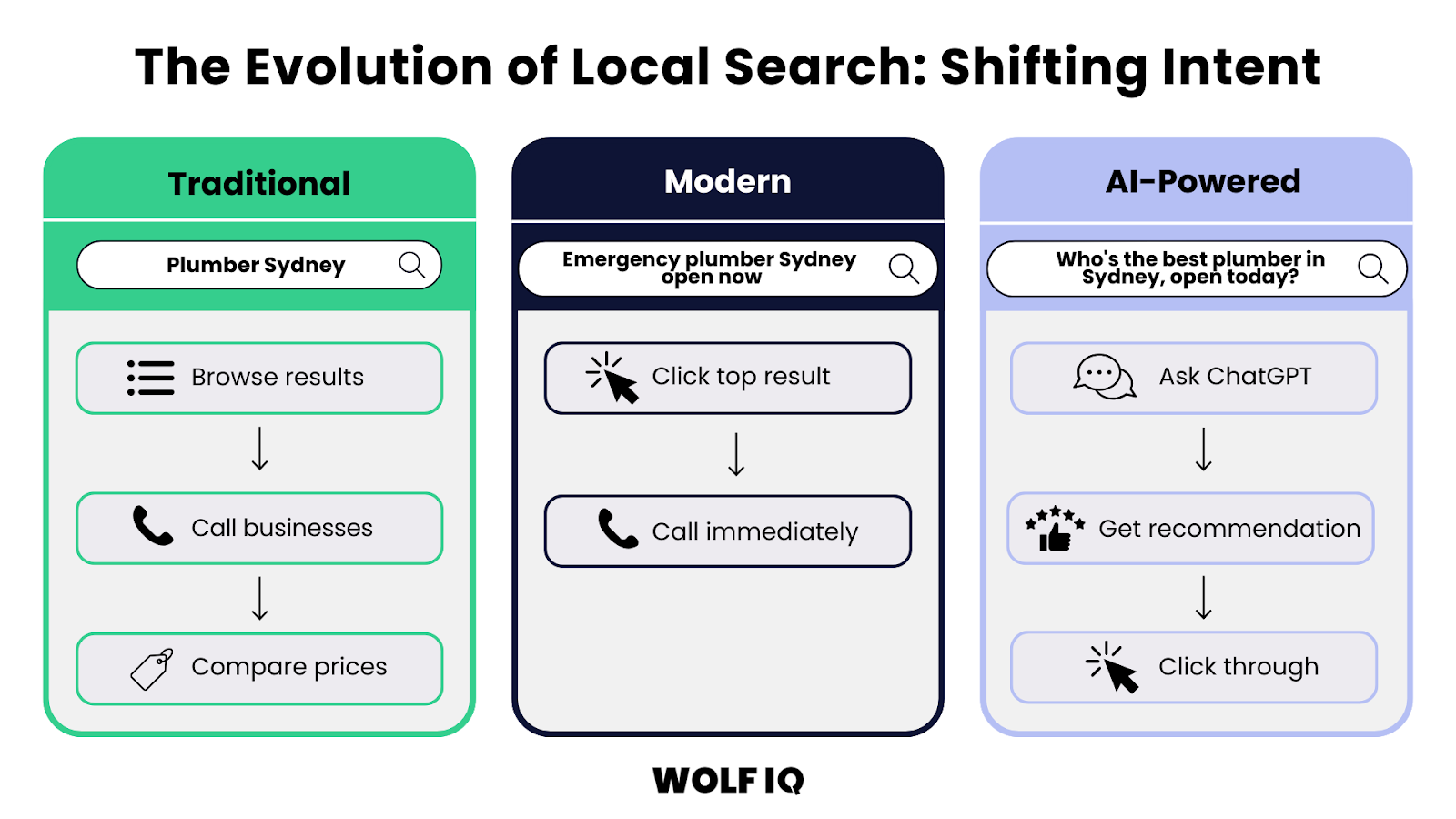
The progression is clear: searches are becoming more specific, more immediate, and more intent-driven.
AI is the current battleground and being visible in traditional or modern search results is no longer enough. You also need to be represented clearly and consistently in the data that AI tools rely on to generate their recommendations.
Customers know what they want, where they want it, and they want it now. Your goal is to be the obvious choice when they search.
What are the key factors in Local SEO Dominance?
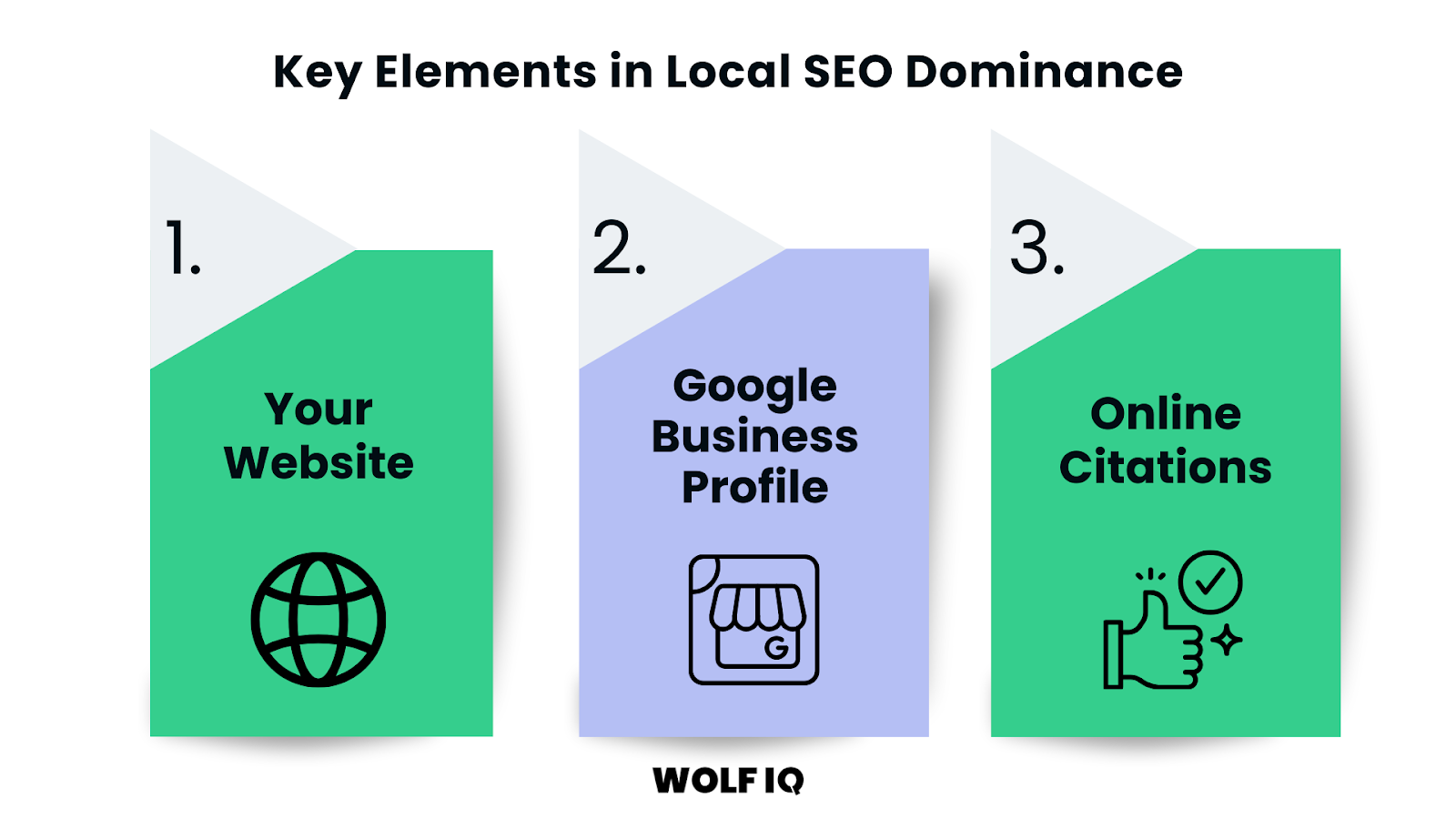
A strong local SEO strategy consists of three elements: your website, your Google Business Profile, and your online citations (which are used in AI).
1. Your Website – The Digital Shopfront
Your website is your digital shopfront.
It's where customers go to learn about your business, verify your credentials, and decide whether they can trust you and hopefully - contact you.
If your website is slow, confusing, or doesn't clearly communicate what you offer, you'll lose customers before they even pick up the phone.
A high-performing website ready for local SEO needs to meet several critical criteria:
| Criterion | Why It Matters | What to Do |
|---|---|---|
| Mobile-First Design | 60% of local searches happen on mobile. If your site doesn't work on a phone, you're going to be invisible to most customers. | Ensure your site is fully responsive. Test it on multiple devices. |
| Fast Loading Speed | Google prioritises fast sites and people abandon slow sites. AI crawlers may not fully index slow sites. | Aim for under 3 seconds. Use Google PageSpeed Insights to identify issues. |
| Clear Contact Information | Customers need to know how to reach you. Search engines need to verify your NAP (Name, Address, Phone). | Put your phone number, address, and hours on every page. Embed a Google Map. |
| Local Business Schema | This structured data tells search engines exactly what your business is, where it's located, and what it does. | Use LocalBusiness schema markup. Include your address, phone, hours, service area, and reviews. |
| Clean Site Structure | Search engines need to understand your website's organisation. | Create clear categories for services and locations. Use a logical URL structure. |
Building Your Location & Service Pages
For most businesses that serve multiple suburbs, website structure is even more important as you need dedicated pages for each service and each location you serve (because it's those pages that are going to ‘rank’, not necessarily your home page).
For example, a plumbing business serving Sydney should have:
- A homepage (general information)
- Service pages (emergency plumbing, drain cleaning, hot water systems, etc.)
- Location pages (plumber in Bondi, plumber in Woollahra, plumber in Rose Bay, etc.)
Each of these pages must be unique and valuable to the audience that is looking for them. You can’t just copy-paste a template with the suburb name - it won’t work.
2. Google Business Profile – Your 24/7 Sales Representative
Your Google Business Profile (GBP) is the single most important element of your local SEO strategy.
It's free to set up, and it has an outsized impact on your visibility in local search results.
When someone searches for your service in your area, Google displays a 'local pack' of businesses at the top of the search results, along with a map. Your GBP is what determines whether you appear in that local pack. It's also what appears when customers search for your business on Google Maps.
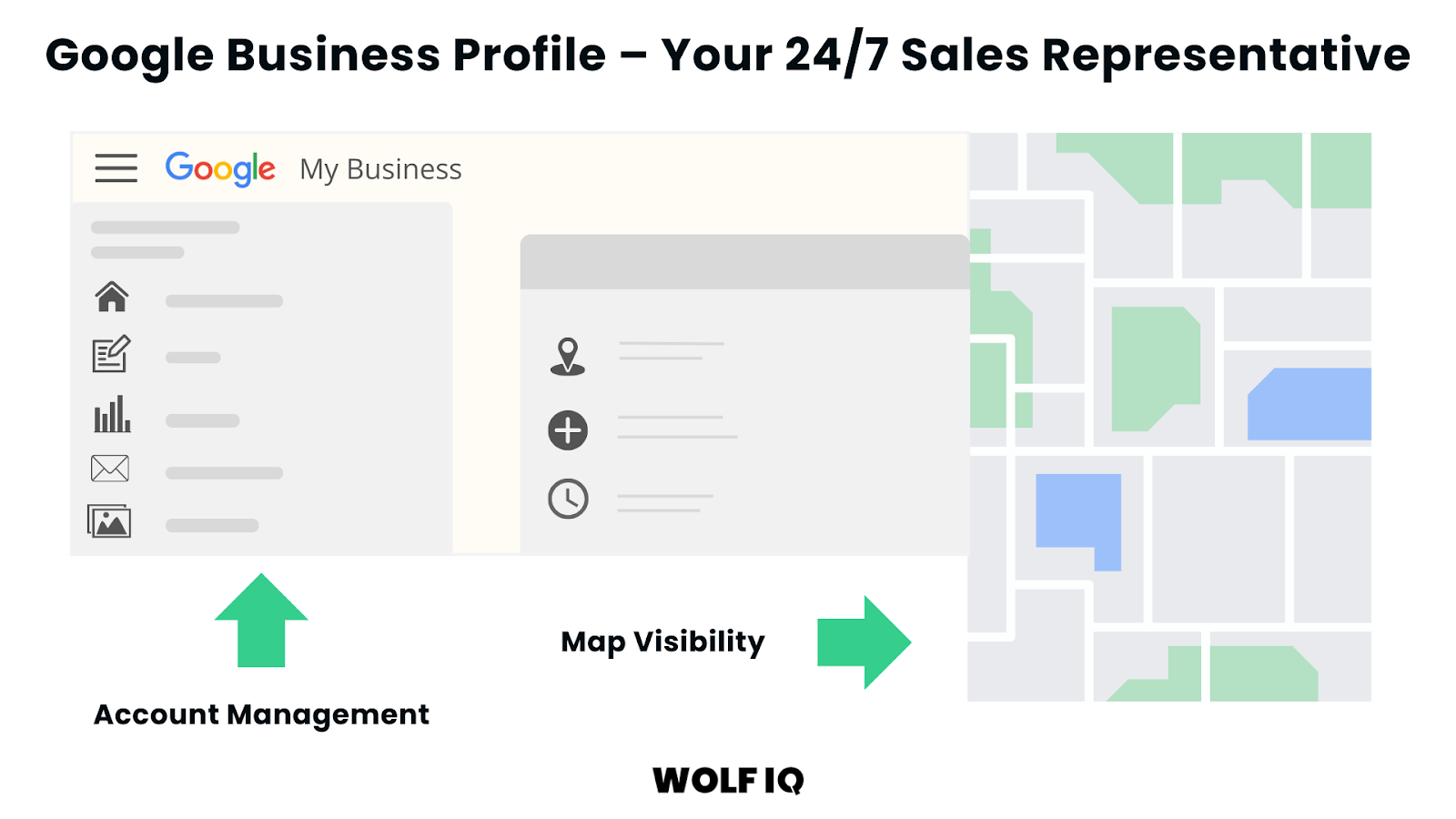
Setting this up sits outside the scope of this guide, but the key five most important things to know are:
| # | Step | Action Details |
|---|---|---|
| 1 | Claim and Verify Your Listing | First, make sure you've claimed your GBP. Go to google.com/business and search for your business. If it exists, claim it. If it doesn't, create it. You'll need to verify ownership (usually via postcard). |
| 2 | Complete Every Section | Don't leave anything blank. Fill out everything if you can. |
| 3 | Upload High-Quality Photos and Videos | Photos are crucial. Profiles with photos get significantly more engagement. Upload storefront, office, or team photos. Make sure all photos are high-quality, well-lit, and professional. |
| 4 | Post Regular Updates | Google rewards active, engaged businesses. Post updates at least weekly like New services, products, or business news. These posts appear in your GBP and can drive clicks and calls. |
| 5 | Manage Your Reviews Actively | Reviews are a powerful trust signal. Customers trust reviews more than marketing claims. |
3. Online Citations – Consistency Is Everything
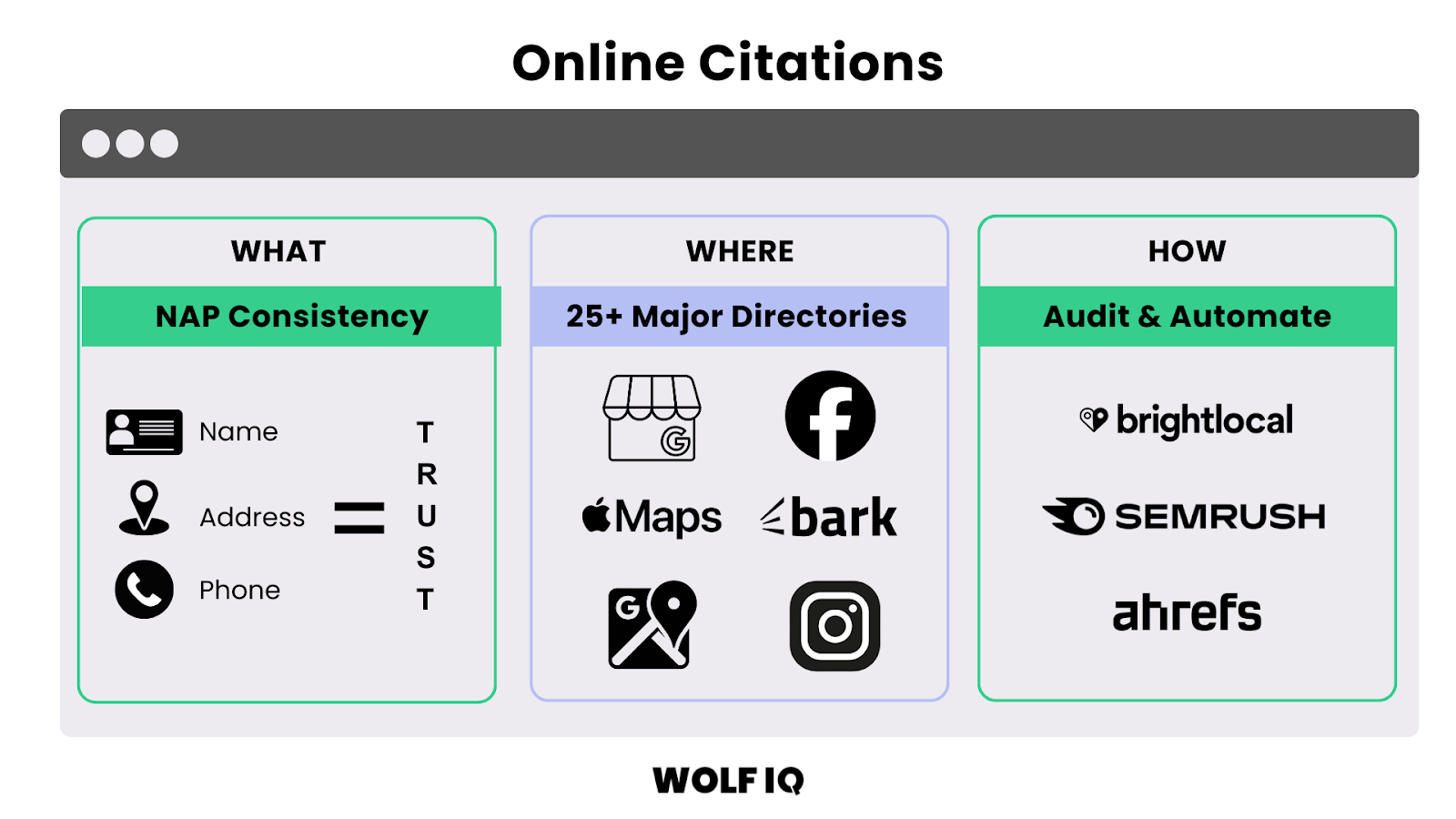
An online citation is any mention of your business name, address, and phone number (NAP) on the internet.
In managing your online citations, there are three core ingredients.
- What: This involves ensuring you have identical business details across the web to verify your legitimacy and boost local rankings.
- Where: Focus on your Google business profile, major directories, and industry-specific sites.
- How: To use tools like Bright Local, SEMrush to audit, fix, and sync listings automatically.
Search engines use citations to verify that your business is legitimate and to understand its geographic focus.
Search engines use citations to verify that your business is legitimate and to understand its geographic focus. Inconsistent citations (e.g., different phone numbers or addresses across directories) can confuse search engines and hurt your rankings.
Use a citation management tool like BrightLocal or SEMrush to audit your current citations, identify inconsistencies, and ensure your information is accurate across all platforms. These tools cost between $50 - $200 per month but will save you time.
Why are Local SEO Pages so important?
This is where hyper-local SEO truly sets you apart from your competitors.
While most businesses have a generic "Location & Service" page, the businesses that dominate local search have dedicated, unique location pages for every suburb they serve.
Location pages serve multiple purposes:
- They capture high-intent local traffic. When someone searches 'plumber Sydney,' a dedicated Sydney page will rank higher than a generic page.
- They show local expertise. By creating unique content for each location, you demonstrate that you understand the specific needs of that community.
- They improve user experience. Customers appreciate finding information specific to their area.
- They support your site structure. Location pages help search engines understand your service areas.
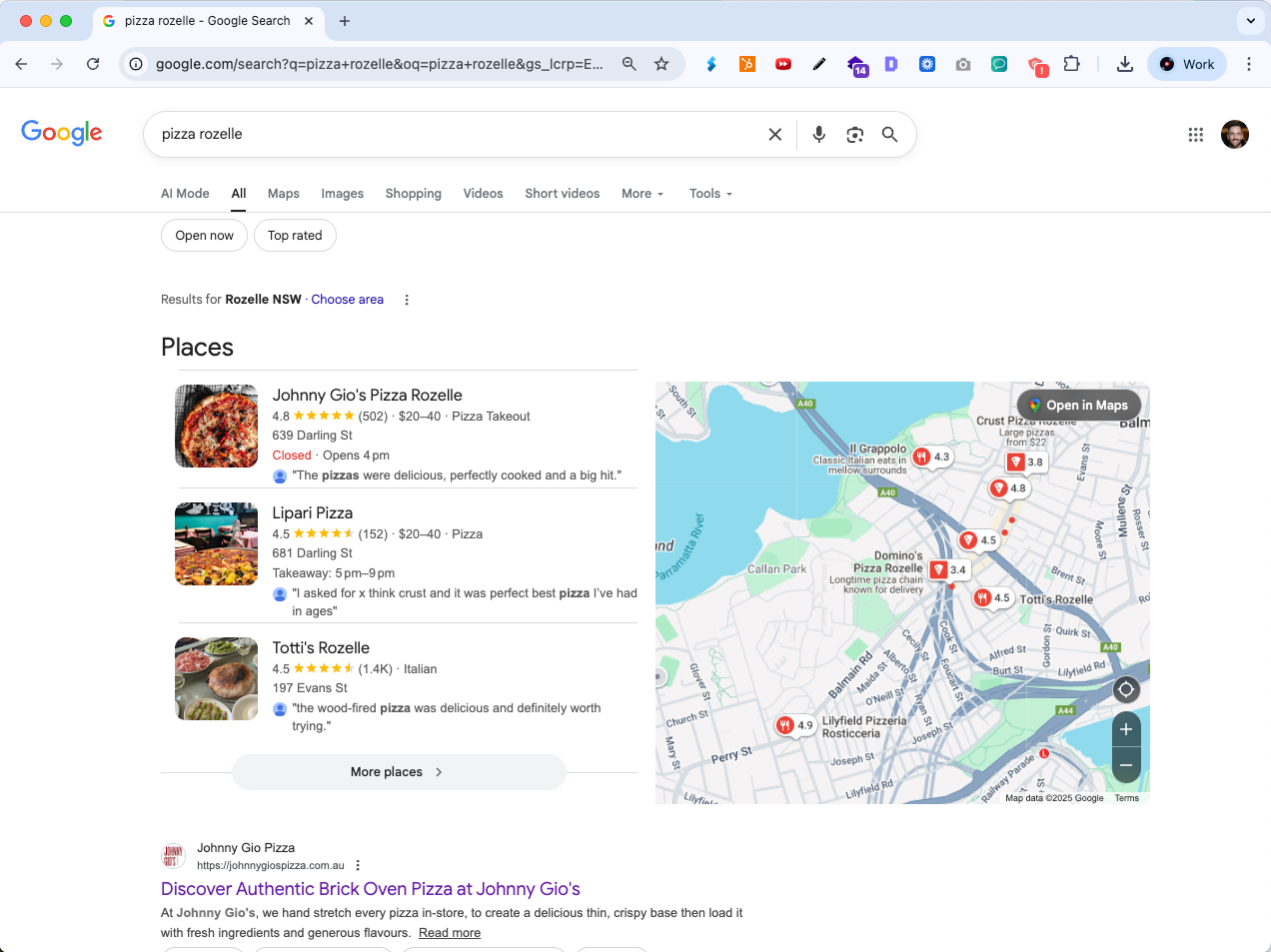
Wolf IQ saw this firsthand when we built the new website for Johnny Gio’s Pizza .
By rebuilding their architecture for local stores in each suburb, we helped them achieve a 3x increase in organic keywords. They didn't just rank for 'Pizza'; they ranked for 'Pizza in [Suburb]' across their entire network.
How to Build Local SEO Pages That Rank?
1. Create Unique, Localised Content
Each location page should have unique content that speaks to the specific needs and characteristics of that suburb. Here's what to include:
- Local context: Mention local landmarks, suburbs nearby, or characteristics of the area. For example, 'Mosman is a leafy, affluent suburb on Sydney's North Shore, known for its beautiful homes and established gardens. Our plumbing team is familiar with the unique challenges of older homes in this area, including corroded pipes and outdated fixtures.'
- Local problems and solutions: Address problems specific to that area. For example, 'Many homes in Collingwood were built in the 1920s and 1930s. These older homes often have cast iron pipes that are prone to corrosion and blockages. Our team specialises in diagnosing and fixing these issues.'
- Local testimonials: Feature reviews and case studies from customers in that specific suburb.
- Local keywords: Naturally incorporate the suburb name and relevant local keywords throughout the page.
Beware of making the mistake of creating 'doorway pages' – thin, duplicate pages where only the suburb name is changed.
Google can detect duplicate content and may penalise your site, so if you're going to create pages,
2. Include Essential Local SEO Elements
Each location page should include:
- Page title: 'Plumbing Services in [Suburb] | [Your Business Name]'
- Meta description: 'Need a plumber in [Suburb]? Our team offers emergency plumbing, drain cleaning, and hot water repairs. Available 24/7. Call now.'
- H1 heading: 'Plumbing Services in [Suburb]'
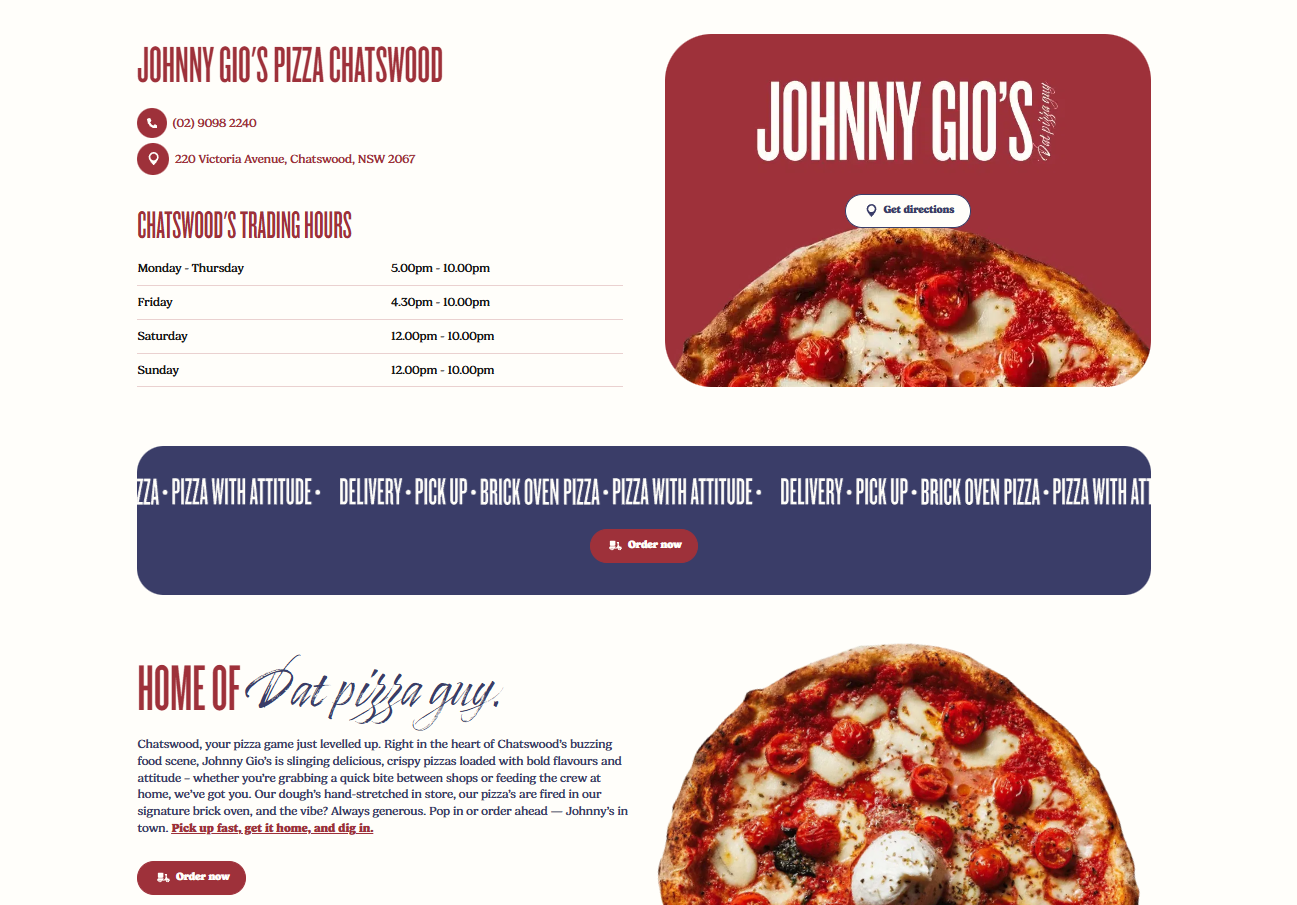
- Embedded Google Map: Show your service area or office location.
- Service list: List the specific services you offer in that area.
- Local testimonials: Include 2-3 reviews from customers in that area.
- Call-to-action: Make it easy for customers to contact you (phone number, contact form, booking button).
- Local business schema: Use structured data to mark up your business information.
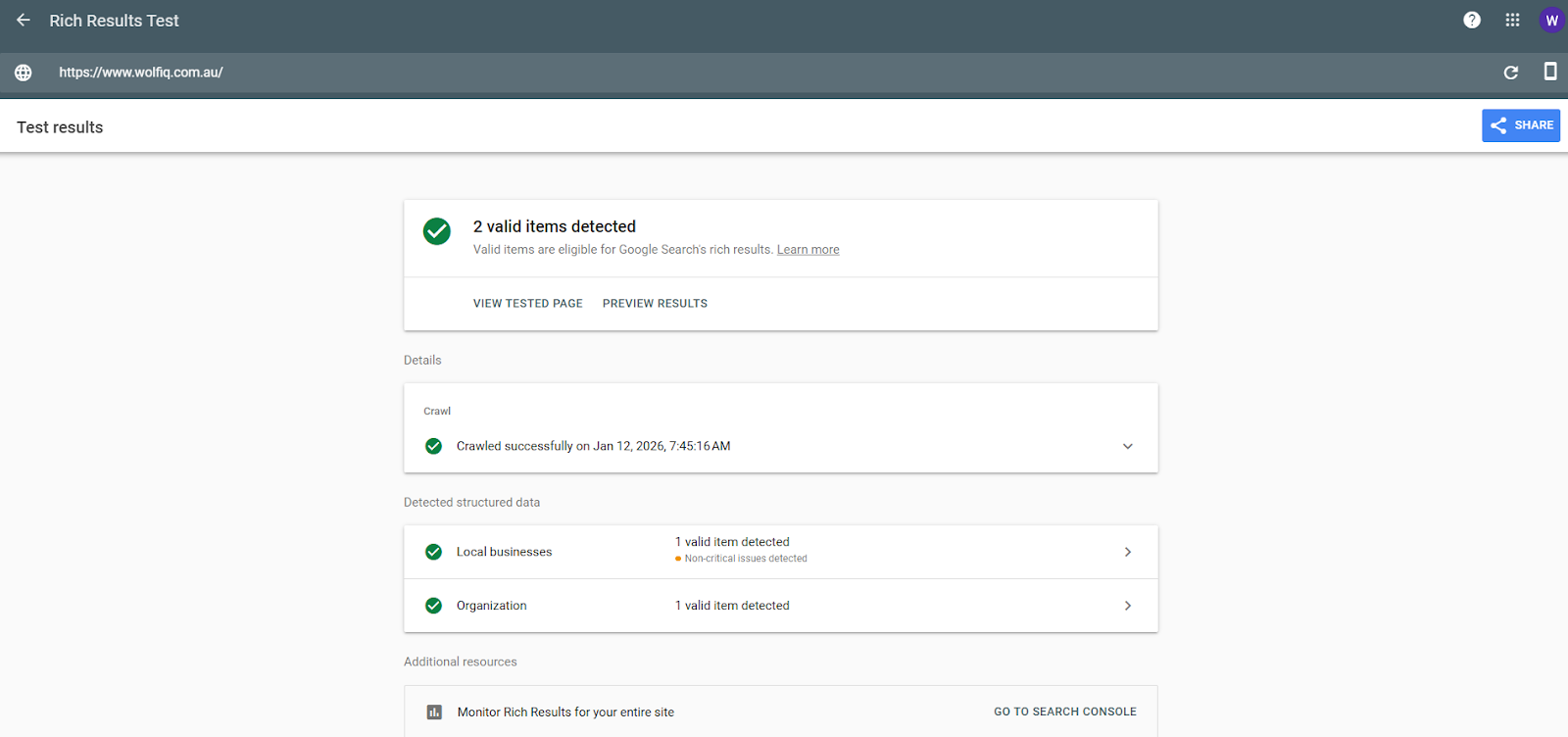
You can use the Google Rich Results Test to verify your website directly.
3. Maintain a Clean Site Structure
Your location pages should be organised logically within your site structure. This makes it easy for search engines to crawl and understand, and it's easy for customers to navigate.
A good structure might look like this.
/
├── /services/
│   ├── /emergency-plumbing/
│   ├── /drain-cleaning/
│   └── /hot-water-systems/
├── /locations/
│   ├── /plumber-Sydney/
│   ├── /plumber-brunswick/
│   ├── /plumber-collingwood/
│   └── /plumber-south-yarra/
└── /contact/
How to write Local SEO Content for Humans and Search Engines?
Creating location pages is just the beginning.
To truly dominate your local market, you need a content strategy that attracts customers at every stage of their journey.
Three types of Local Search Intent
Not all searches are created equal. When someone searches for your service, they could be in one of three stages:
| Search Intent | Example | What They Want |
|---|---|---|
| Informational | 'How to fix a blocked drain' | Information and education. They're not ready to buy yet. |
| Commercial | 'Best plumber in Sydney' | To evaluate options. They're considering their choices. |
| Transactional | 'Emergency plumber Sydney' | To take action immediately. They're ready to buy. |
Your content strategy should address all three types of intent.
Optimising for AI
As AI search becomes more prevalent, your content strategy needs to evolve. Here's how:
Use Conversational Language
Write as if you're talking to a customer, not a search engine.
Use natural language and answer questions directly. For example, instead of 'Emergency plumbing services available 24/7,' write 'Need a plumber at 2 AM on a Sunday? We're here for you.'
Embrace the Q&A Format
Create FAQ sections that answer common customer questions. This makes it easy for AI to pull your content into its answers. Structure your FAQs with clear questions and concise answers.
Implement Schema Markup
Use structured data to help search engines and AI understand your content. Key schema types for local businesses include:
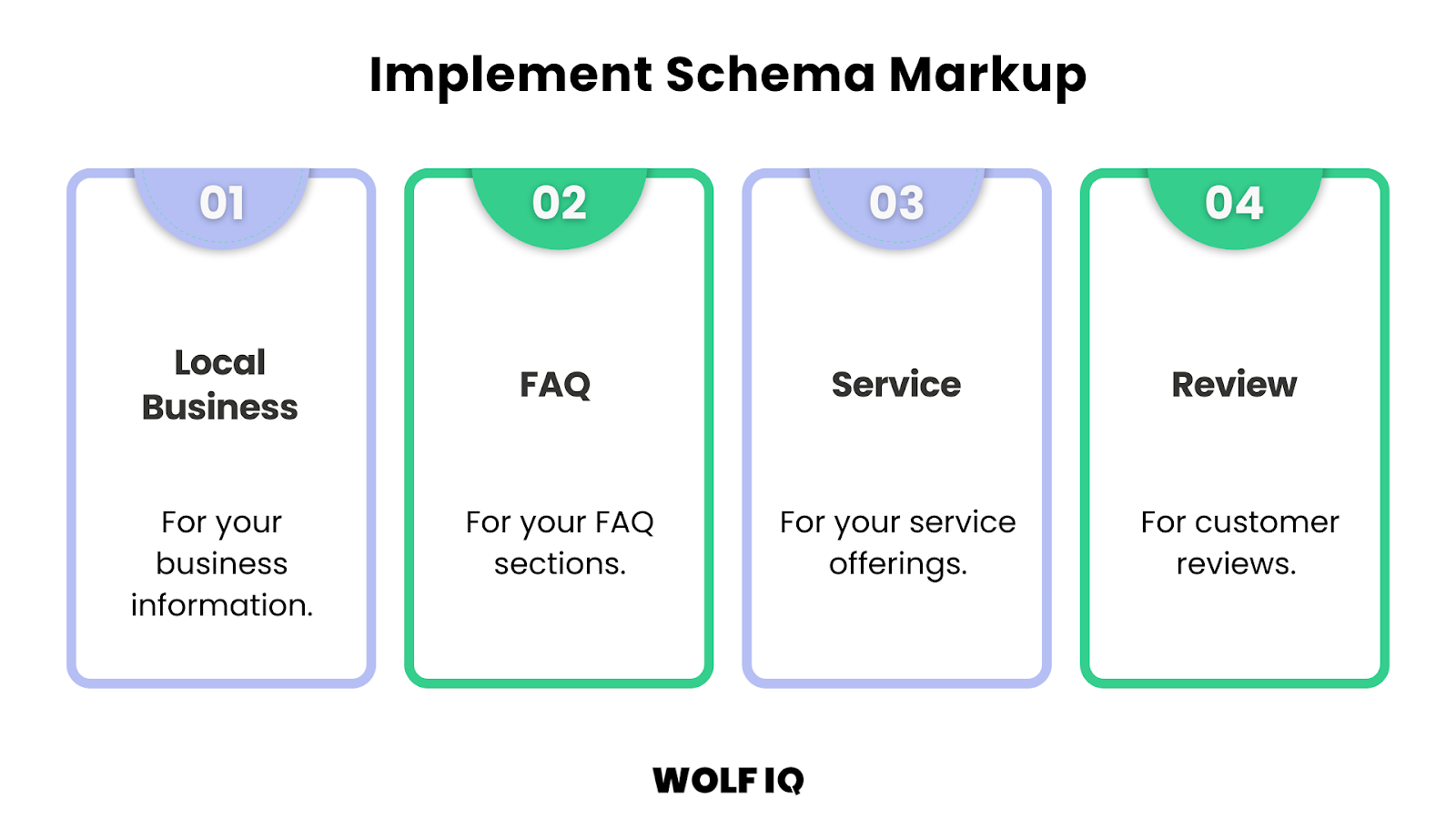
You can get AI to review your schema directly by using this prompt below.
You are a Senior Technical SEO Specialist.

Go to my website and read the current Schema Markup (JSON-LD) for my business.

[PASTE YOUR WEBSITE HERE]

Please review it for the following:

1. **Validation:** Identify any syntax errors, warnings, or missing required fields based on Google's latest Structured Data guidelines.
2. **Local SEO Opportunities:** specific properties I am missing that would improve local visibility (e.g., 'areaServed', 'geo' coordinates, 'hasMap', 'sameAs' social profiles, or 'openingHoursSpecification').
3. **AI Optimisation:** Suggest any specific details I should add to help AI tools better understand my service area and offerings.

Please output the audit findings first, followed by the corrected and optimised JSON-LD code.
How to Build Local SEO Authority and Trust?
Ranking in search results is one thing; getting customers to click and call is another. To truly dominate your local market, you need to build authority and trust.
Google Reviews
Google reviews are one of the most powerful trust signals in local search. They influence both search rankings and customer decisions.
Your Review Strategy:
- Encourage reviews systematically. After completing a job or service, follow up with customers via email or SMS asking them to leave a review. Make it easy by providing a direct link.
- Respond to every review. Even if it's just a thank you, acknowledge every review. For negative reviews, respond professionally and offer to resolve the issue.
- Incorporate keywords naturally. When responding to reviews, you can naturally incorporate local keywords. For example, 'Thanks for choosing our Sydney plumbing team!'
- Monitor multiple platforms. Reviews appear on Google, Facebook, Yelp, and industry-specific sites. Monitor all of them.
It can be tough for you or your team to rely on memory, so an automated system like SmartReviews (by Wolf IQ) can automate the collection of Google Reviews via SMS and email drip campaigns.
This strategy helped Aussie Industries turn their reputation from 1.8 stars to 4.8 stars over 90 days.
Get Local Backlinks
Backlinks are links from other websites to yours, and are a major ranking factor.
There are many ways to get them, but these are the core four we advise our customers to pursue.
Local backlinks are especially valuable and here is how you can build them:
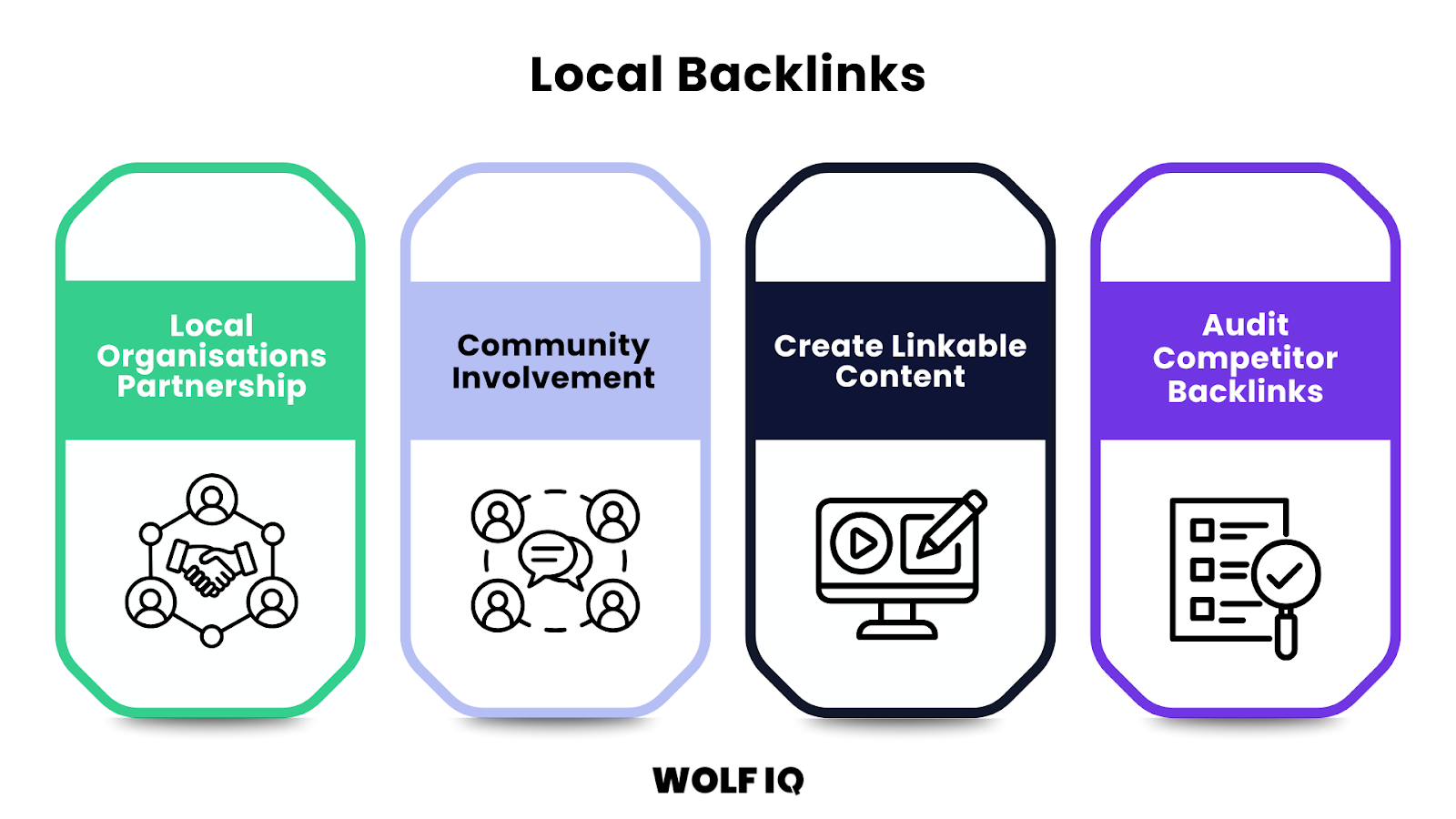
- Local Organisations Partnership: Partner with complementary local businesses. For example, a moving company in Mosman, you could partner with a local Real Estate Agency (like Ray White Mosman ) to become their "preferred mover" for rental properties.
- Community Involvement: Sponsor local clubs or events. A great Sydney example would be sponsoring the Coogee Surf Life Saving Club or a school fete in Paddington, which often earns you a link on their "Sponsors" page.
- Create Linkable Content: Create resources that locals want to share. You could write an "Accounting best practices for Sydney businesses in the inner west," for helping small businesses in Sydney's Inner West navigate their finances.
- Audit Competitor Backlinks: See where your competitors are listed. If a competitor is featured in the North Sydney Business Directory or an article on Concrete Playground , reach out to those same publishers to get your business listed too.
How to Measure Local SEO Strategy Success?
You can't improve what you don't measure. Here's how to track your hyper-local SEO performance:
Key Metrics to Monitor
| Metric | What It Measures | How to Track |
|---|---|---|
| Local keyword rankings | How well you rank for local searches | Google Search Console, Rank Tracker tools |
| Local pack visibility | How often you appear in the local pack | Google Search Console, local rank tracking |
| Website traffic from local searches | How much traffic you get from local searches | Google Analytics |
| Phone calls and form submissions | How many customers are contacting you | Call tracking, form analytics |
| Google Business Profile views and actions | How many people are viewing your GBP and taking action | Google Business Profile insights |
| Review count and rating | How many reviews you have and your average rating | Google Business Profile, review sites |
| Conversion rate | What percentage of visitors become customers | Google Analytics, CRM |
Your Path to Local SEO Dominance
If your business serves a local community, local SEO is critical. Nearly half of all Google searches are for local information, and 76% of those searches result in a store visit.
You don't need a massive marketing budget to dominate your local market. You just need to:
- Build a strong foundation with a fast, mobile-friendly website and an optimised Google Business Profile.
- Create unique location pages for every suburb you serve, not generic doorway pages.
- Publish high-quality, local content that addresses the needs of your target audience.
- Build authority and trust through reviews, local backlinks, and community involvement.
- Optimise your site for AI to future-proof your business.
- Measure your results and refine your strategy with data.
The businesses that implement these strategies now will dominate local visibility on SEO and AI overviews for years to come.
Looking to improve your Local SEO visibility?
Get in touch with our team for a free consultation.
Get in Touch Trusted by 500+ businesses