MOG Content Strategy: How to Create 10x Content That Wins in AI Overviews
.webp)

-p-130x130q80%20(1).png)
Most businesses do content backwards.
They sit in a room, build a content calendar, generate content with AI, publish a few posts, and hope Google rewards them. Most of the time, it turns into a graveyard of average articles that no one reads, no one shares, and no one remembers.
The MOG Content Strategy is different.
Find the best-performing content on the internet for a topic that already gets traffic. Work out why it ranks, where it is weak, and what the market still needs. Then build something significantly better, more useful, more insightful, and more trustworthy.
That is the philosophy. We do not try to create demand from nothing. We find where demand already exists, then build the best answer in the market.
This is the same thinking behind our own long-form pages we will share later in this post.
Key Takeaways
- MOG content starts with proven demand — find what the market already searches for, then build the best answer available.
- Study the current winners first — understand why they rank, then identify exactly where they fall short.
- Proprietary data and real experience are your moat — AI and competitors cannot easily replicate what you have lived.
- Structure matters as much as substance — clear headings, tables, and visuals make content easier for both humans and AI engines to trust.
- One great MOG article outperforms ten average ones — invest in depth, not volume.
What is the MOG Content Strategy?
The MOG Content Strategy is a content methodology built around one idea: if a topic is already attracting traffic, leads, attention, and commercial interest, then the opportunity is not to copy what exists. The opportunity is to outperform it.
A MOG article is not a 600-word blog post written because someone needed to tick off the monthly content calendar. It is a deep, practical, commercially dominant piece of content that answers the full intent behind the topic.
The goal is not to create “more content.” The goal is to create the content that deserves to win.
Why Traditional Strategies Fall Short
Traditional content strategy usually falls into a few familiar models. There is the pillar and cluster model. There is the editorial calendar model. There is the SEO keyword list model. There is the social-first model.
These frameworks are not wrong. They are just incomplete.
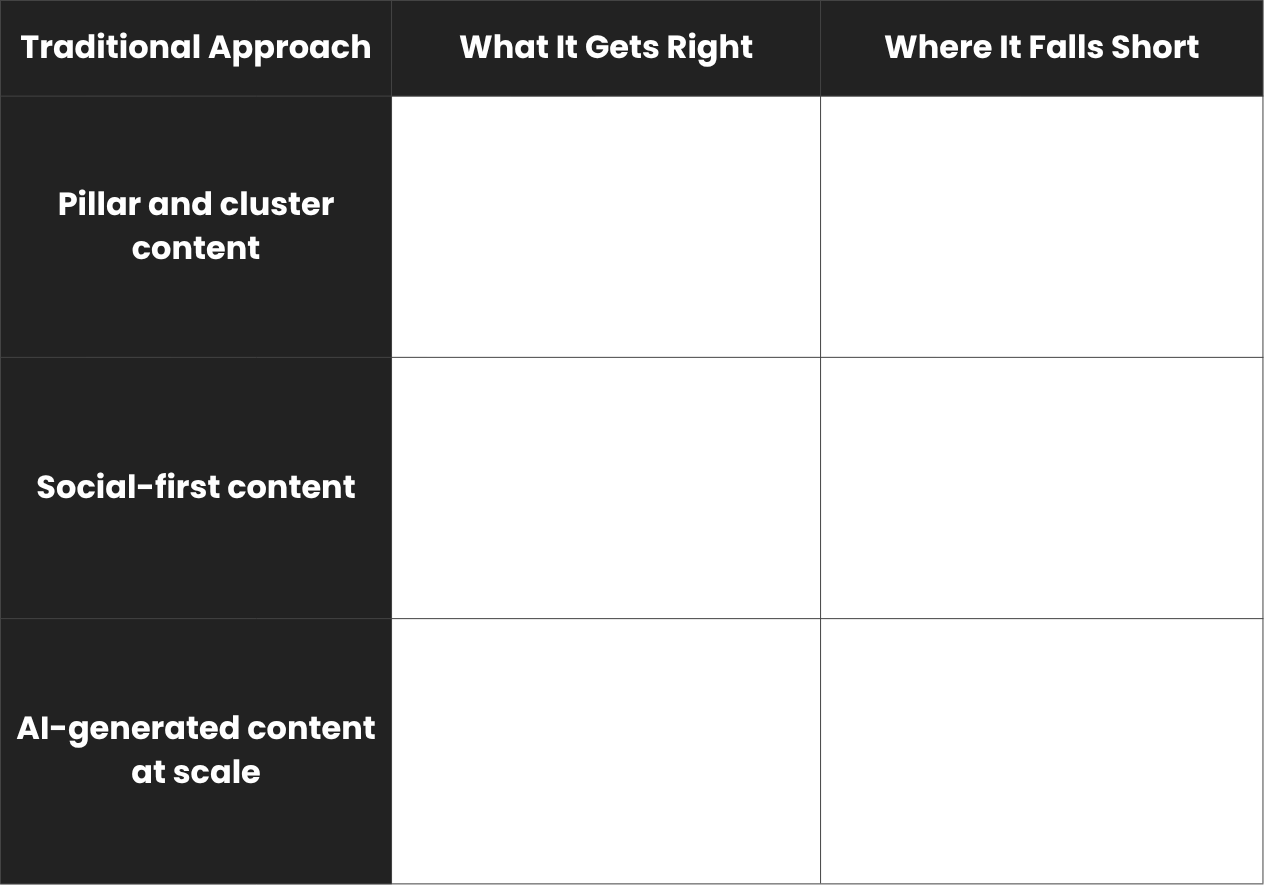
The problem is not that businesses need less content. The problem is that most businesses need fewer average pieces and more serious pieces.
The Philosophy: Be Way Better
The internet does not need another average article on website costs, redesign checklists, SEO basics, or conversion tips. It needs content that actually helps someone make a better call.
That is why MOG content is built around the idea of being way better.
Not marginally better but obviously way better.
That usually means doing three things that are hard to do with AI, and competitors do not bother investing the manual energy and effort into doing it effectively.
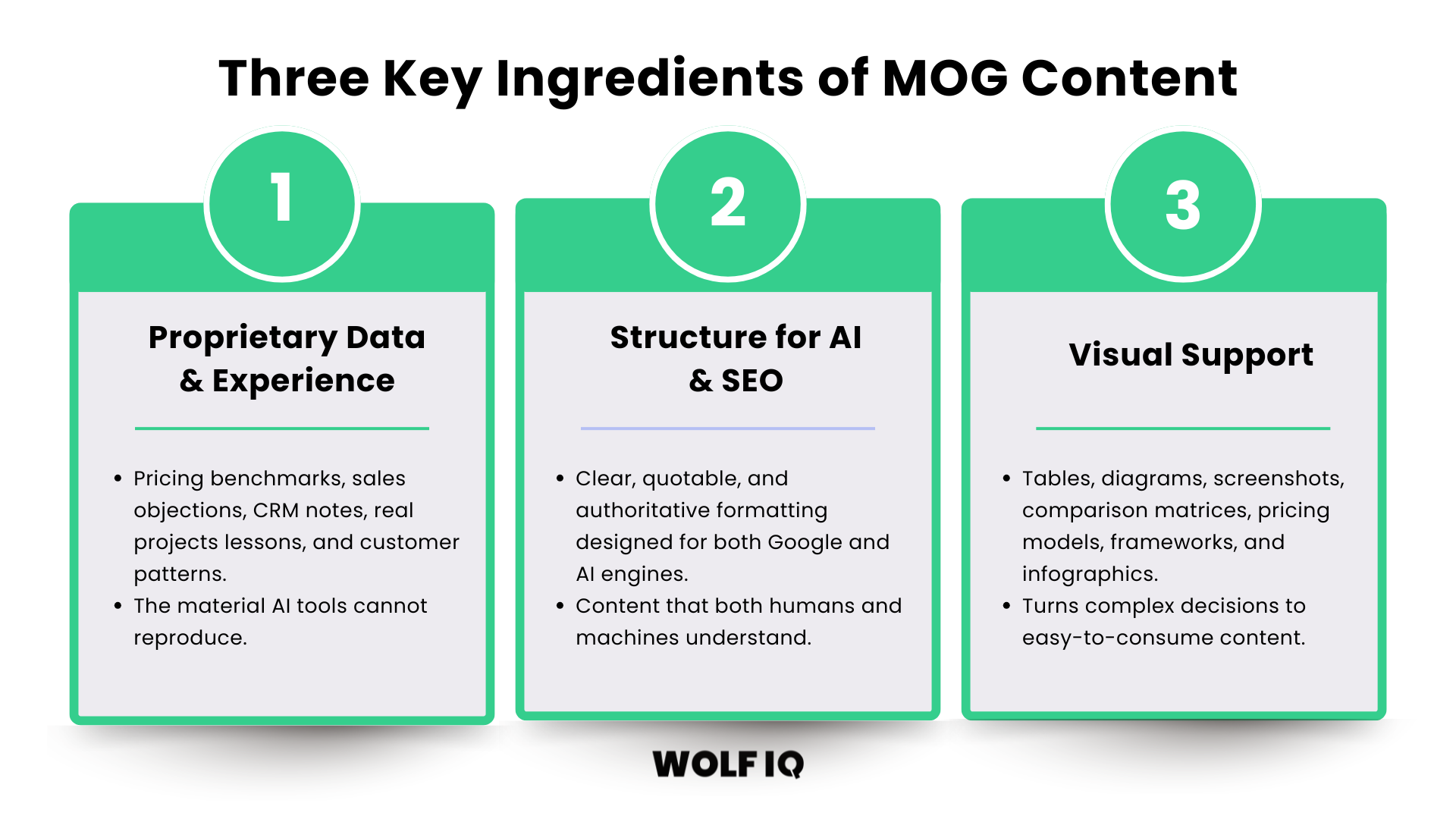
First, the content needs to inject proprietary data and experience. This could be pricing benchmarks from projects you have delivered, sales objections you hear every week, anonymised customer patterns, survey results, support tickets, CRM notes, or lessons from real campaigns. This is the material AI tools and generic competitors cannot easily reproduce.
Second, it needs to be optimised for both SEO and AI visibility. Google still matters, but AI engines, AI Overviews, chat interfaces, and LLM-powered search experiences are changing how people discover answers. Content needs to be clear, structured, quotable, and authoritative.
Third, it needs better visual support. Tables, diagrams, screenshots, comparison matrices, pricing models, frameworks, infographics, and decision trees all help readers stay longer and understand faster.
That is how one mega-piece becomes a content ecosystem.
MOG in Practice
A strong example is our own website cost guide. Instead of simply saying “websites cost between X and Y,” the article breaks down DIY, brochure, eCommerce, and custom app website costs. It also covers setup costs, ongoing costs, hidden costs, budget risks, hosting, domains, SEO, content, media, integrations, and choosing between DIY, freelancers, offshore developers, and professional agencies.
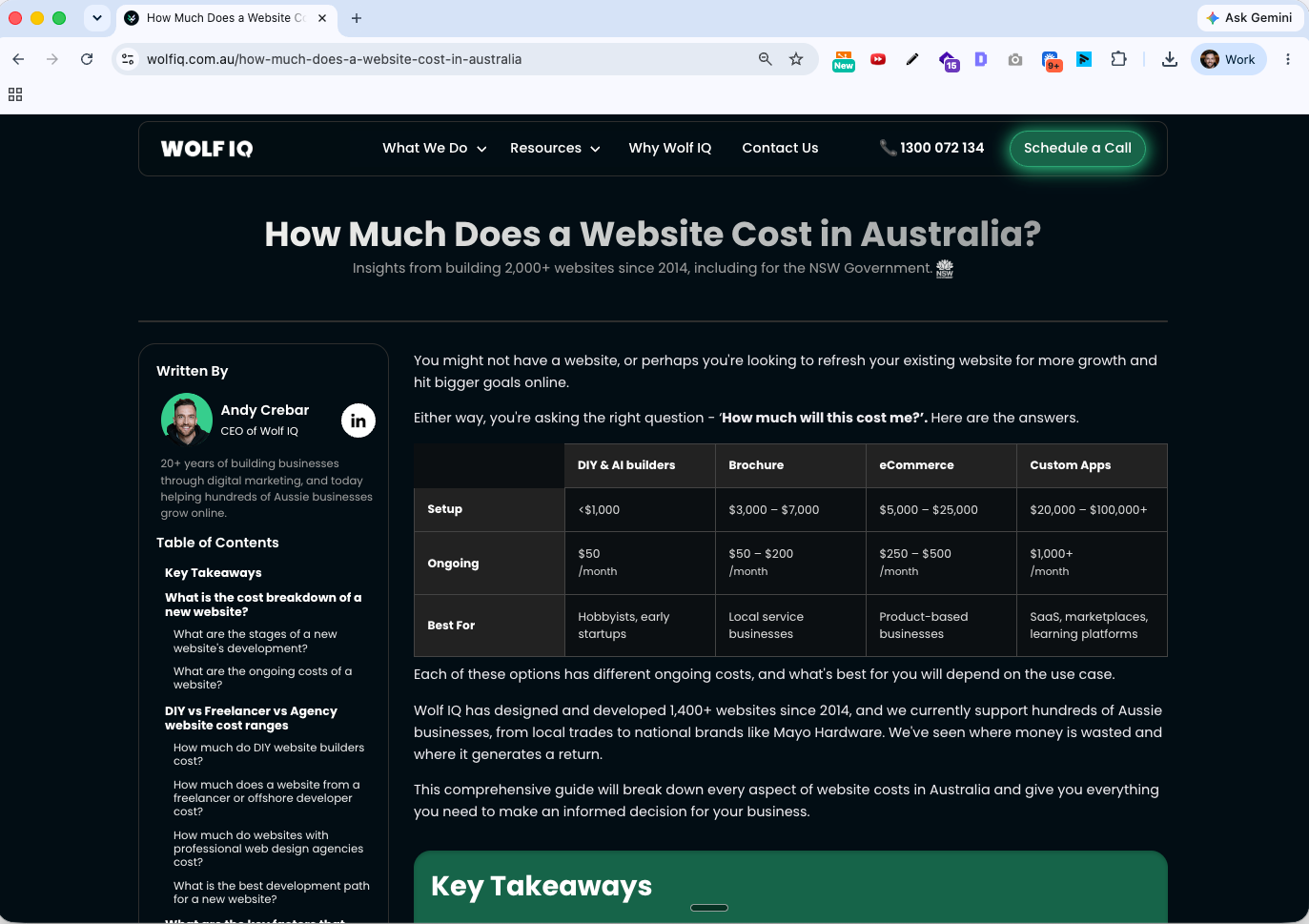
That is MOG thinking.
The article does not just answer the surface-level keyword. It answers the buying decision behind the keyword.
The Website Redesign Guide does the same thing. It covers what a redesign is, when a business needs one, ROI, technical red flags, UX warning signs, hidden costs, SEO risks, launch steps, timelines, mistakes, and FAQs.
The WordPress Care Plans page also follows the same pattern. It does not just define a care plan. It compares hosting with care plans, explains risk, uses a clear analogy, includes security and performance reasoning, and positions maintenance as a proactive strategy rather than a technical add-on.
.png)
This is the key lesson: the best MOG content answers the keyword, but it also answers the fear, confusion, objections, and commercial decision sitting behind the keyword.
Step 1: Find Proven Demand
Start with what the market has already proven it cares about.
A good MOG topic usually has at least one of these signals. It has strong search demand. It appears in sales calls repeatedly. It gets cited in AI Overviews.
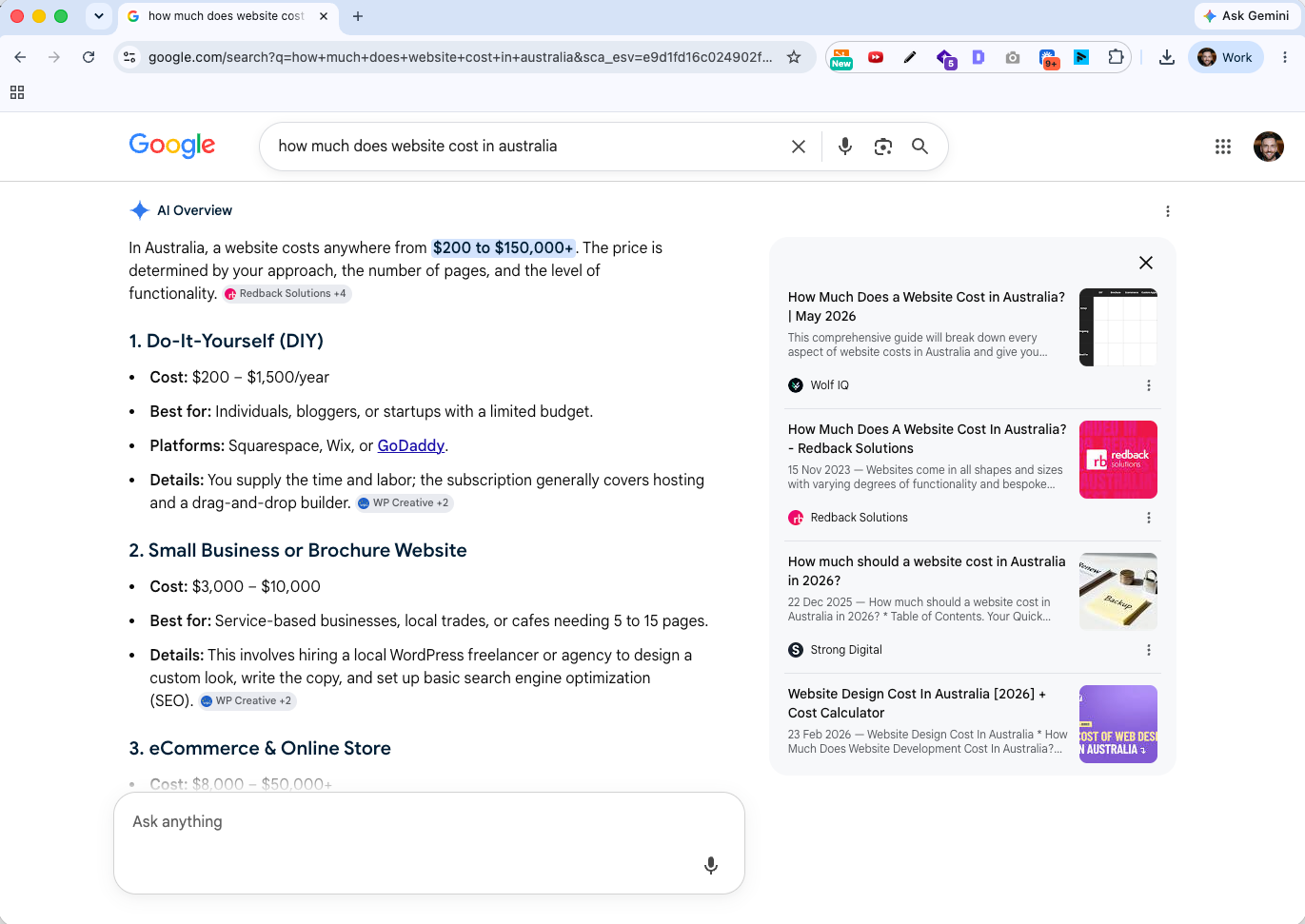
For example, “How Much Does a Website Cost in Australia?” is a strong MOG topic because it is commercially loaded. Many searchers are planning a website project, building a budget, comparing providers, or trying to avoid being ripped off.
The best topic signals are high search demand, repeated sales questions, weak competitor content, commercial intent, and strategic confusion. The goal is not to chase every keyword. The goal is to find topics where better content can change the buying conversation.
Step 2: Reverse-Engineer the Winners
Once we know the topic, we study what is already working.
We look at who ranks, what format they use, how deep the content goes, what headings they include, what examples they use, how fresh the data is, what visuals they include, what questions they answer, how strong the CTA is, and what they leave out.
This is where the content gap analysis matters.
A basic SEO review will show keywords and rankings. A MOG review goes further. It looks at the whole market landscape.
.png)
This is where most businesses stop too early. They see the competitor has written 2,000 words and assume they need 2,500. That is not the game.
The better question is: “What would make the reader trust us more?”
Step 3: Find the Untapped Angle
Every serious MOG piece needs a reason to exist.
If your article says the same thing as everyone else, just with slightly different wording, it is not a MOG article. It is a copy with better formatting.
The untapped angle is the thing competitors missed.
To find it, you need to audit the current top-ranking pages and identify their specific weaknesses. Perhaps they rely entirely on text without any supporting video to explain complex concepts. Maybe they lack credible quotes from industry experts, or their statistics are several years out of date.
Often, competitors fail to provide transparent pricing, skip over real-world examples, or write generic content that lacks specific Australian context. You might also find they ignore the potential risks involved in a decision, offer no clear visual frameworks to help buyers choose, or have not structured their content to be easily parsed by AI search engines.
For Wolf IQ, that often means writing from direct agency experience. In our website content, we can talk about building 1,400+ websites since 2014, supporting hundreds of Australian businesses, and seeing where money is wasted or growth is created.
That experience matters because a business owner does not just want theory. They want pattern recognition.
They want to know what usually goes wrong, what is worth paying for, where corners get cut, what hidden costs appear later, and what decisions create long-term growth.
That is the kind of insight competitors struggle to copy.
Step 4: Build the 10x Outline
A normal outline is a list of headings.
A MOG outline is a buying journey.
It starts with the obvious question, then expands into everything the reader needs to know to make a confident decision.
.png)
This is why Wolf IQ pages often include a table of contents, key takeaways, examples, comparisons, and practical frameworks. It makes the content easier to read, easier to scan, and easier to reuse.
The outline should also be built around the full search intent. For a topic like content strategy for SEO, the user may want to know what it is, how it works, how it differs from pillar content, how to find topics, how to write 10x content, how to optimise for AI, how to distribute it, and how to measure results.
If your article only answers one of those, you have not answered the full intent.
Step 5: Inject Real Data and Experience
This is the part most competitors cannot match.
Generic content is built from other content. MOG content is built from market experience.
The best inputs often sit inside the business already. They are not in keyword tools. They are in sales calls, support emails, project retrospectives, analytics accounts, CRM notes, customer interviews, internal Slack threads, proposal feedback, and objections from lost deals.
.png)
This is how a topic becomes defensible.
Anyone can write “10 tips for website redesign.” Fewer businesses can explain the hidden cost of losing SEO rankings during launch, the conversion impact of poor UX, the operational risk of rushing QA, and the decision process we use across real website projects.
That difference is the moat.
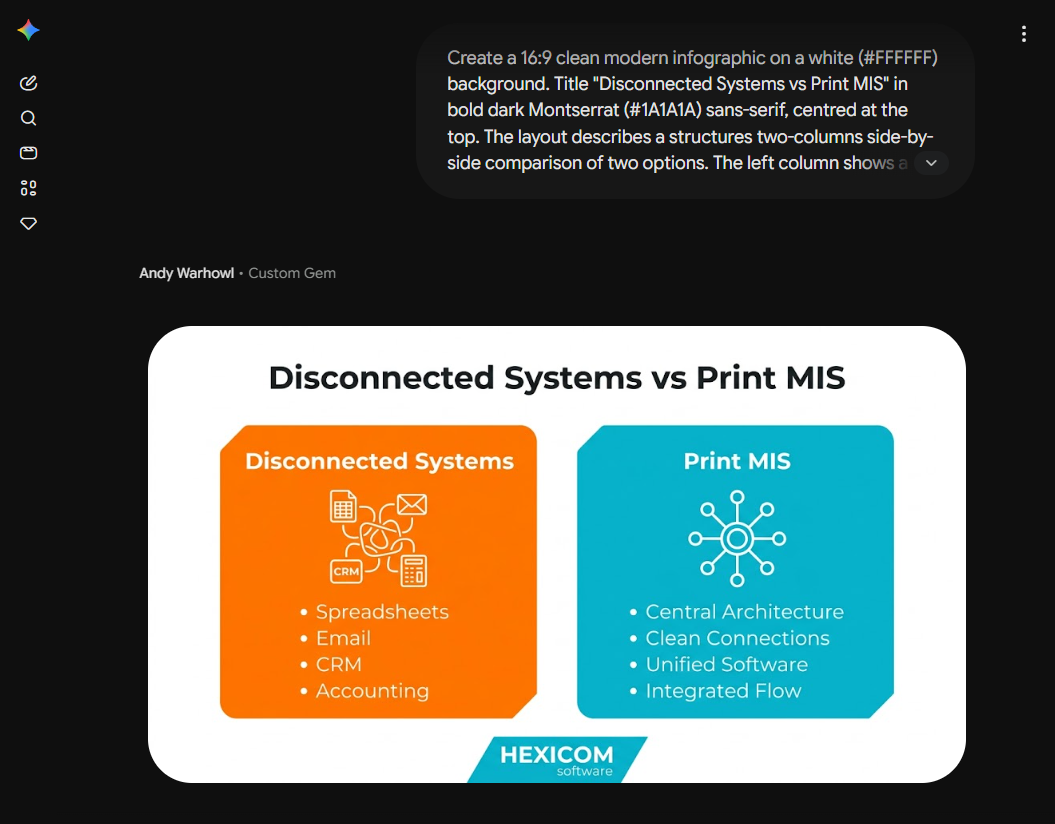
Step 6: Make It Visual
Most businesses underinvest in the visual layer of content.
They write the article, add one stock image, and call it done. That is a missed opportunity.
Visuals help readers understand faster. They break up long pages. They increase perceived quality. They make complex decisions easier. They also create assets that can be reused across LinkedIn, email, proposals, videos, and sales conversations.
The strongest visual assets are comparison tables, process diagrams, decision trees, checklists, screenshots, charts, pull quotes, and infographics. This is why the visual layer is not decoration. It is part of the strategy.
If the article is about website costs, show the cost ranges. If it is about redesigns, show the process. If it is about WordPress care, show the difference between hosting and proactive maintenance.
Make the content easier to consume than anything else ranking for the topic.
Step 7: Optimise for SEO and AI
SEO optimisation is still critical, but it is no longer enough to only think in terms of blue links.
Search is moving toward answer engines and AI Overviews. Buyers increasingly use Google AI features, ChatGPT-style tools, voice assistants, and AI summaries to get recommendations. That means content needs to be built so both humans and machines can understand it.
For AI search optimisation, the goal is not to trick AI engines. The goal is to become the most useful, trustworthy, and easy-to-reference source on the topic.
.png)
Being the primary source matters. If you publish first-party benchmarks, original surveys, expert commentary, project examples, and strong frameworks, you give both search engines and AI systems something worth referencing.
That is why MOG content is naturally aligned with LLM visibility: it is structured, comprehensive, original, and useful.
Why MOG works
MOG works because it aligns with how real buyers behave.
People do not want more content. They want clarity.
For search engines, MOG works because it builds topical relevance, satisfies intent, improves engagement, attracts links, and gives the page a stronger chance of being seen as the best answer.
For AI engines, MOG works because it provides clear, structured, original, quotable information. AI systems are more likely to surface brands that have strong explanations, unique insight, and well-organised answers.
For sales, MOG works because it creates leverage. Instead of explaining the same concept 50 times, your team can send the guide. Instead of competing only on price, you educate the buyer on risk, value, and decision criteria.
The biggest mistake is confusing length with quality. A long article can still be average if it says nothing new.
That is why we treat MOG content as infrastructure.
Final Word
The MOG Content Strategy is about creating the best answer in the market for the questions your buyers already care about.
Find the proven topic. Study the current winners. Identify the gap. Add proprietary insight. Make it visual. Optimise it for SEO and AI. Repurpose it into micro-content. Measure what matters. Keep improving it.
We are doing this ourselves. The five articles below are our top-performing MOG pieces — each one generating hundreds of clicks and website visitors learning about our brand every month.
- Best eCommerce Platforms in Australia
- How Much Does a Website Cost in Australia?
- 43 Ways to Increase Traffic to Your Website
- How to Write an About Us Page
- Best Web Design Agencies in Sydney 2026
At Wolf IQ, we build content strategies, websites, and growth systems for Australian businesses that want to win online. If you want to turn your expertise into content that ranks, converts, and gets reused across your whole marketing engine, get in touch with Wolf IQ.
Let's build a strategy that fits your business.



.webp)

.png)
.svg)
.svg)
.svg)